



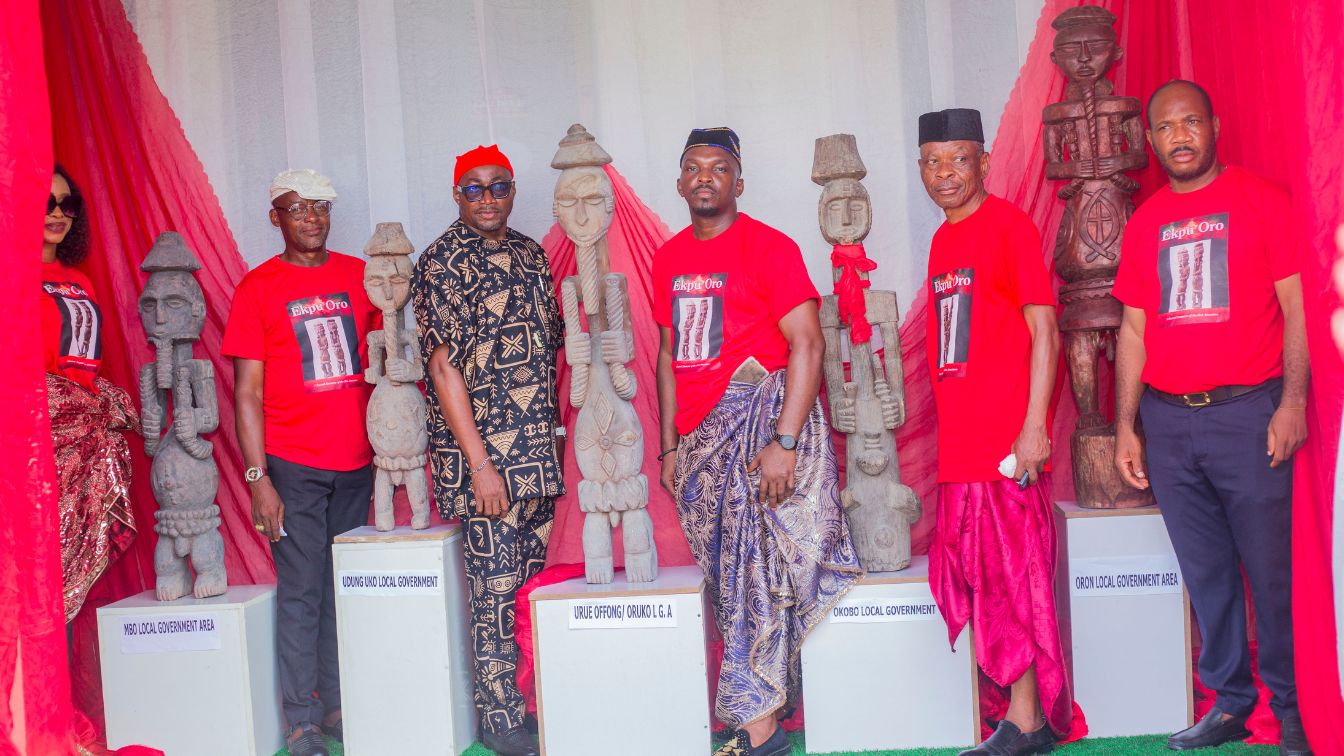
On Wednesday, June 10, 2026, the National Museum Society Uyo, Akwa Ibom State, gathered to mark International Museum Day 2026. Held in collaboration with the National Commission for Museums and Monuments in Uyo, the event brought scholars, royalty, artists, and museum advocates to one venue – the Uyo National Museum on Ring Road. At the centre of it all were the Ekpu Oro figures, the ancestral carvings of the Oron people.
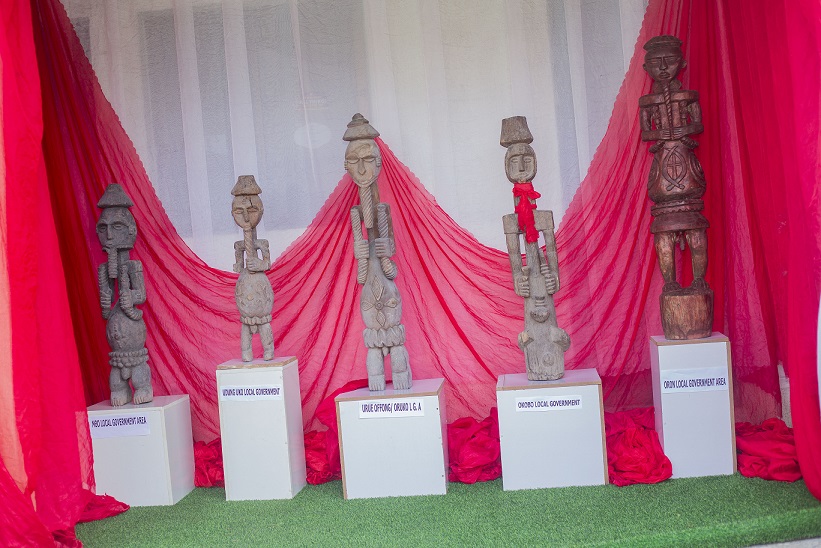
International Museum Day is an annual observance overseen by the International Council of Museums (ICOM). This year’s theme, Museums Uniting a Divided World, captures what museums have always been asked to do: hold space for every culture, close gaps between communities, and keep memory intact for those who come after. The National Museum Society Uyo chose the Ekpu Oro figures as the symbol for this year’s celebration. Over 20 generations of Oron ancestral history are encoded in these carvings. They are old and sacred, scattered across the world.
Where the Ekpu Oro Figures Are Housed Today
The Ekpu Oro figures currently sit in some of the world’s most recognized institutions:
- The Metropolitan Museum of Art, New York
- The British Museum, London, UK
- Seattle Art Museum
- Musée du quai Branly – Jacques Chirac, Paris, France
- African Museum of China
- Oron Museum, Akwa Ibom State
- Immortal Cosmetic Art Gallery, Uyo, Akwa Ibom State
That so many of them live outside Nigeria was part of the main conversation, with speakers openly calling for reparation and the return of the figures from foreign museums.
What the Ekpu Oro Figure Actually Represents
Dr. Efiong Eyefoki, a Fine Art professor at the University of Uyo and a historian of Oron descent, delivered the lead presentation. His account of the Ekpu’s anatomy and symbolism was the intellectual backbone of the entire event.
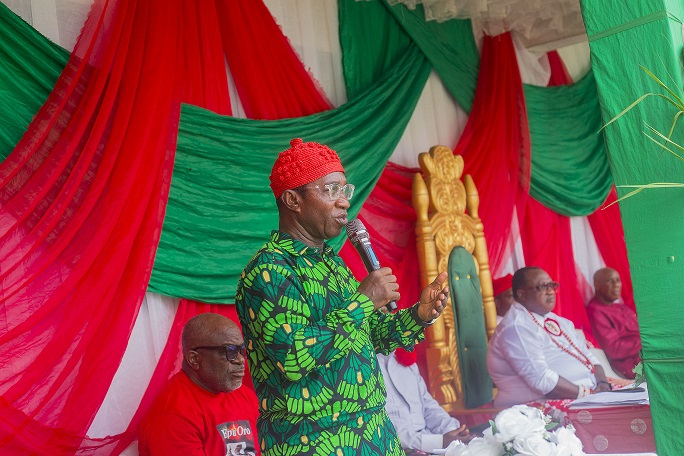
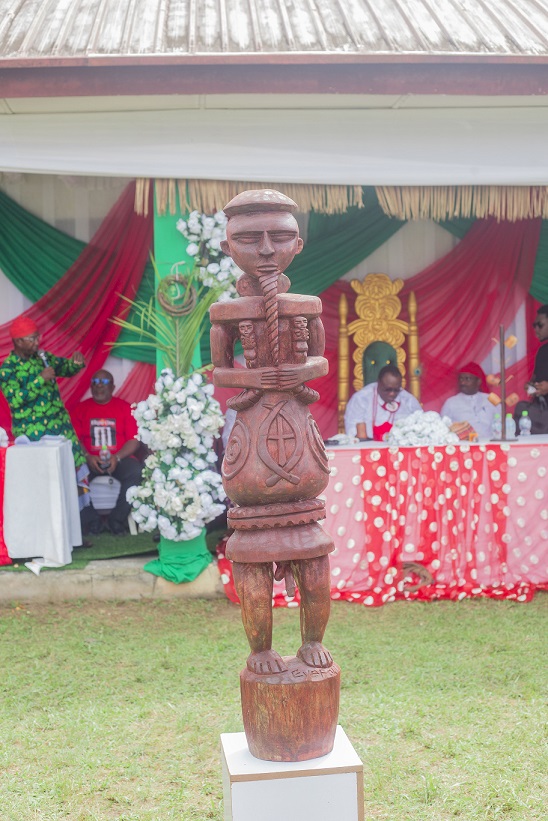
The Ekpu, he explained, is not a religious idol. It’s a carved biography, a visual record of an ancestor’s life and status. Every part of the figure carries deliberate meaning. From the head upward represents the sky, the heavens.
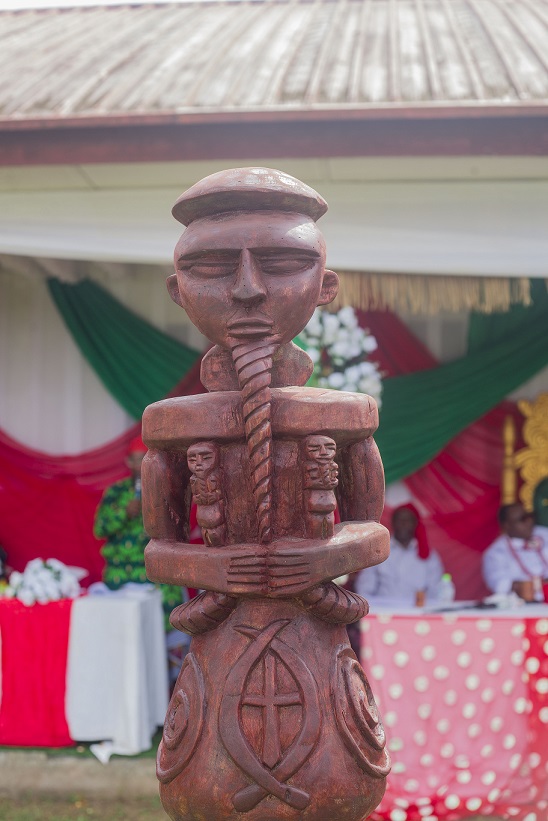
The shoulders speak to the weight of life’s responsibilities. The hands represent strength, and by that strength, wealth was built and communities were sustained. Inscribed on the body is Nsibidi, an ancient writing system native to West Africa.
The neck on an Ekpu is never fully carved. That incompleteness is intentional and represents an ancestor’s return to the underworld. When someone dies, you don’t see them again. The bulbous belly represents water, the essence of life. The Oro ancestors were masters of the sea, and that relationship lives in the carving.
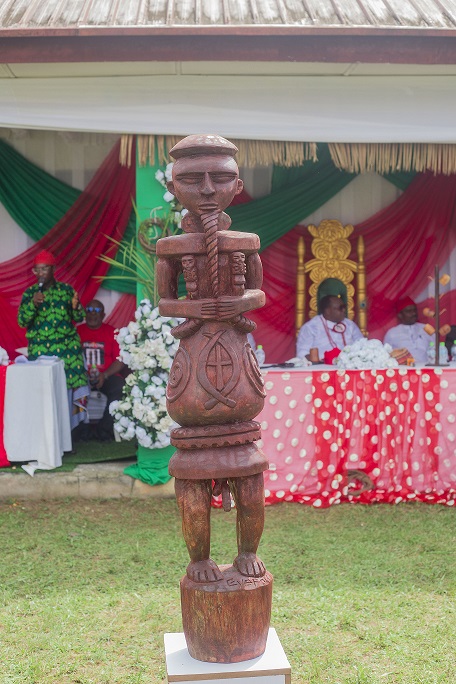
If an Ekpu holds another Ekpu in its arms, that figure is a great-grandfather.
The belt at the waistline is called the Ikpaya, a symbol of authority used to restore order in the Oro community. To earn the right to wear one, a man had to spend 49 years in initiation, Eyefoki said.
Below the waist represents the land of the dead, where ancestors walk with God ahead of reincarnation. In Oro cosmology, the Ekpu was the fastest channel to the divine. Humans, considered too impure to reach God directly, communicated through their ancestors.
Dr. Eyefoki postulated that Africans practised a form of guided monotheism long before colonialism arrived. He noted that the failure to understand it, or the refusal to, is what led to African traditional religion being labelled ‘idolatry’ and ‘paganism’.
The phallus on the Ekpu represents procreation and fertility, tied to the belief in reincarnation. The short, bandy legs suggest a limited understanding of the underworld: an honest acknowledgement of the unknown, carved right into the figure.
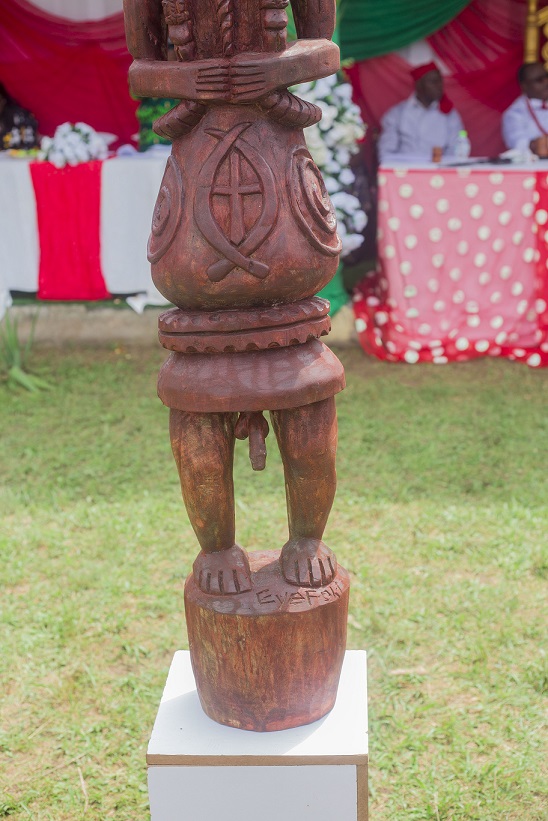
He traced the origins of the Ekpu to over 2000 BCE, connecting its aesthetic lineage to ancient Egypt. The long beard and dangling phallus on the Ekpu share clear visual similarities with Egyptian carvings, including the face of Tutankhamun, the young pharaoh who died around 1323 BCE. Dr. Eyefoki attributed this to cultural continuity. Most West Africans, he noted, migrated southward from North Africa.
Dr. Eyefoki stated that you will never see an Ekpu figure with open eyes. The dead, in Oro belief, see inwards.
The Voices in the Room
The Ata Oro of the Oron Kingdom, Edidem Ita Okokon VIII, was represented by his son, Crown Prince Chris Abasi Eyo.
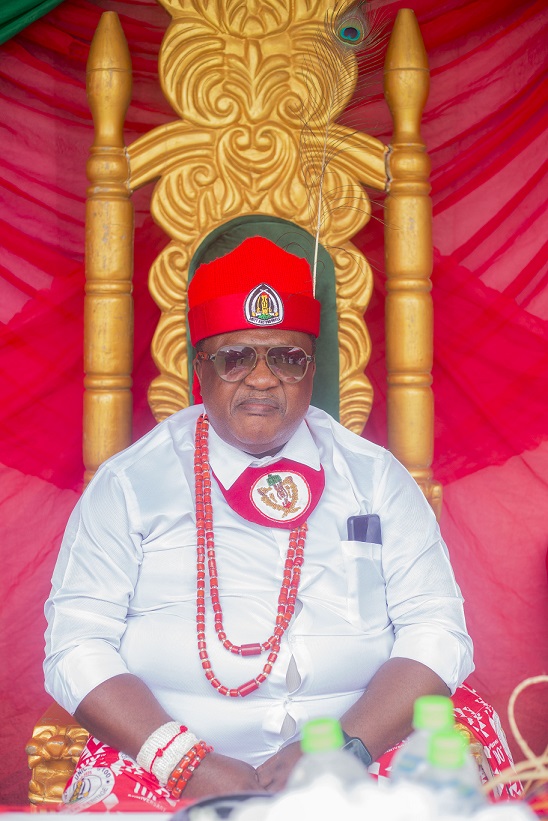
In his address, the Crown Prince was clear about a point that is often misunderstood. The Ekpu Oro figures are not objects of worship. They are memorials, created to honour and remember the good ones who have passed on.
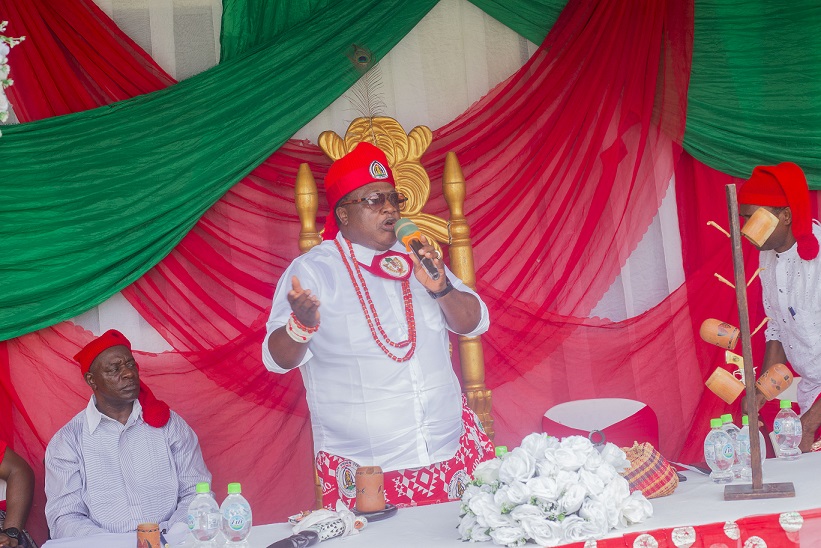
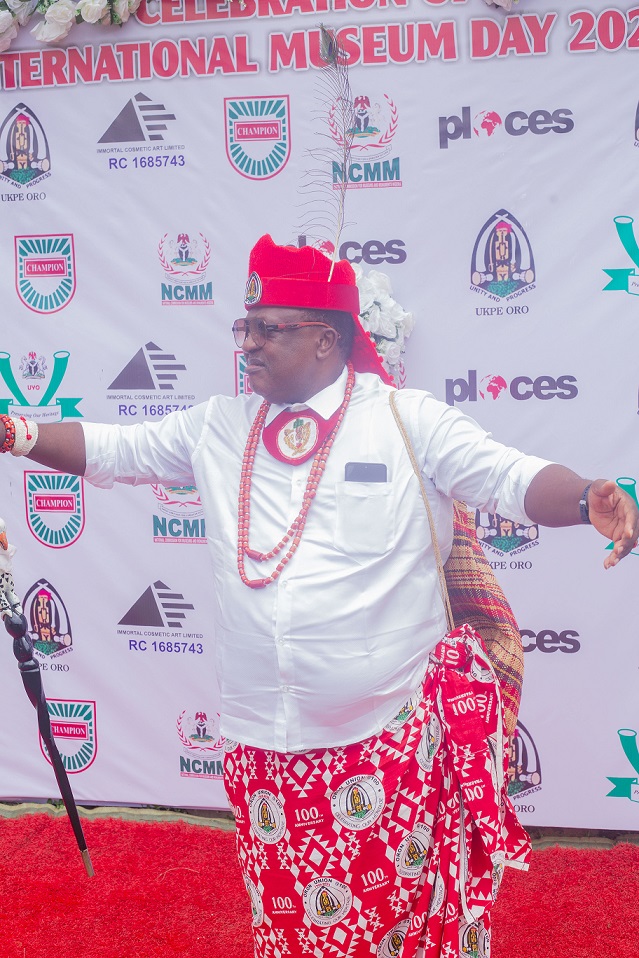
John Amanam, president of the National Museum Society of Nigeria, welcomed guests to the event. Amanam is a sculptor, art collector, inventor, and the first African to create hyperrealistic prosthetic body parts designed for dark-skinned amputees.
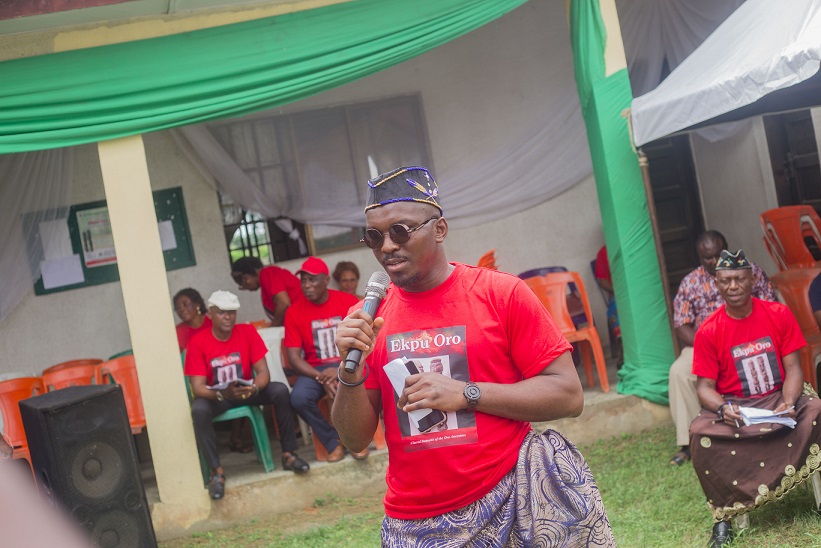
Amanam pointed out that the museum is the first point of contact for tourism in any city or state. Therefore, if it’s neglected, the entire tourism chain suffers.
He decried the state of the Uyo National Museum, calling on the state governor, Dr. Umo Bassey Eno, to prioritize museum funding and rehabilitation in line with the ARISE Agenda, positioning museums as viable contributors to the state’s revenue. Amanam closed by inviting anyone who loves culture and art to register with the National Museum Society.
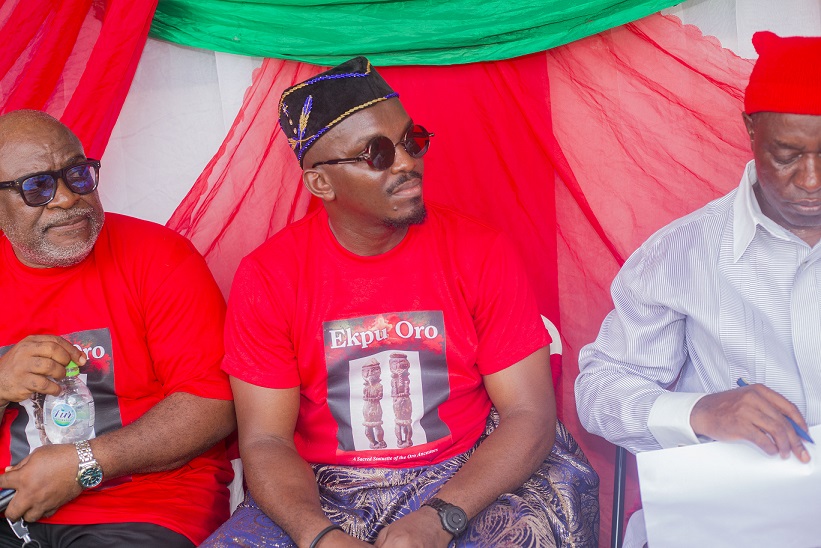
Dr. Peter Esu, Professor of Marketing Communications and Applied Rhetoric at the University of Uyo, gave one of the event’s keynote addresses. He described the Ekpu Oro figures simply: they are the preserved spirituality of the Oro ancestors. Dr. Esu noted that museums keep collective memory. They create space for dialogue that most other institutions can’t.
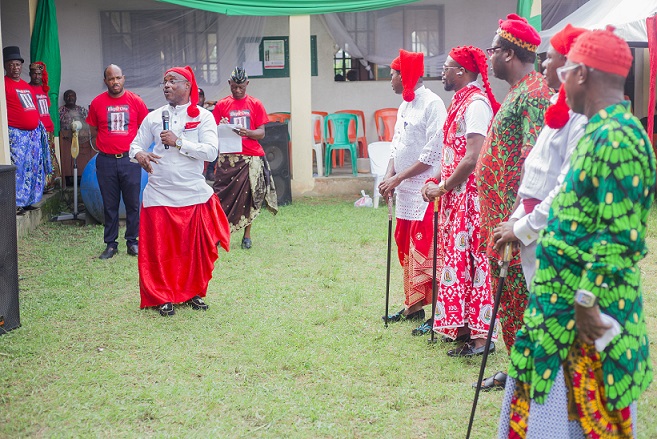
He pointed to a fact many people don’t know. The Oron Museum was started in 1935 by Mr. Murray, a British curator, making it arguably the oldest museum-founding effort in Nigeria. The figures he began preserving then are the same ones being celebrated today.
Dr. Esu also called for digital museums to be established across all Nigerian states, not just in Lagos. If museums are to unite a divided world, they first have to be accessible. Strategically placed, properly maintained, and appealing to both locals and international visitors.
The Ekpu and What Comes After
Akwa Ibom State carries a wide range of material culture beyond the Ekpu Oro figures. The Ekpo Nyoho mask of the Ibibio people and the Nkubia face mask of the Annang are among the other significant art forms that deserve equally careful preservation and visibility.
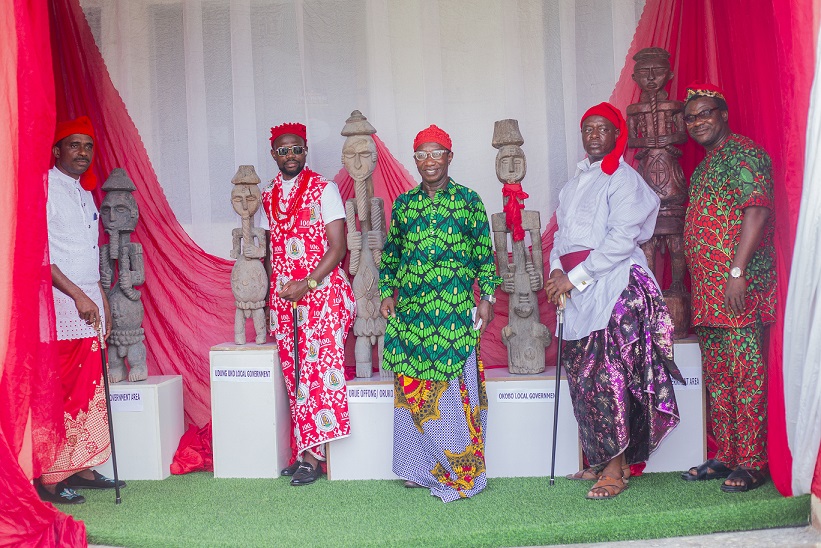
The highlight of the June 10 event was the unveiling of the Ekpu Oro figures, each representing an Oro constituency. Traditional dance followed, refreshments were served, and the president and vice president of the National Museum Society gave closing remarks. The event ended with interviews and photo sessions.
The Ekpu Oro figures have survived over 20 generations, travelled into the collections of the world’s most prestigious museums, and are still being studied, celebrated, and advocated for.
The conversation around their return from foreign museums has only grown louder.
For more travel and cultural tourism content from across Nigeria and beyond, visit our blog.