

Table of Contents
The Point of No Return is the exact spot on the West African coast where enslaved Africans took their last steps on their homeland before being loaded onto ships bound for the Americas and Europe. It sits on Gberefu Island, a short boat ride from Badagry town in Lagos State, Nigeria.
Badagry served as a corridor for Europeans to carry slaves to new destinations in the early eighteenth century. Its cenotaph is called “Point of No Return.”
Over the course of three centuries, more than 500,000 Africans were sold into slavery through the coast of Badagry. Many historians believe the true number is higher because not every ship and transaction was recorded.
What makes Badagry unique among West African slave ports is how intact the story remains. The barracoons still stand. The market site still exists. The tainted well is still full. The path through the island is still walkable. You can trace the entire journey—from capture to departure—step by step.
A Brief History: How Badagry Became Africa’s Most Notorious Slave Port
Badagry, a lagoonside city in Lagos State, Nigeria, is of tremendous historical significance due to its long history of slave trading, which dates from the early sixteenth century and reached a peak in the 1720s. The city attracted prominent local and Portuguese slave merchants such as Felix de Souza, Domingo Martinez, and Ferman Gomez as pioneer slave merchants in the city.
Its geography made it ideal for the trade. Badagry sits between Lagos and the Republic of Benin, flanked by creeks, lagoons, and the Atlantic Ocean. You can easily navigate its waterways. The town was positioned as a channel between European traders on the coast and captors from deeper inland.
During the trans-Atlantic slave trade, the town was a middleman between European traders on the coast and traders from the hinterland.
At the height of the trade, local chiefs collaborated with European and American slavers. History informs us that the coast of West Africa was a fertile area for slavers in the 1800s because the rulers, chiefs, and warriors collaborated with the foreigners to capture their own people. The white-cap chief, Sunbu Mobee, traded many of his people with the Portuguese in exchange for valuables.
This is a painful truth that Badagry does not hide. And it is one of the reasons this destination carries such emotional weight.
The Slave Route: Stop by Stop
Walking the Badagry slave route is a full-day experience. An emotional, educational, and unforgettable experience. Here is what the route looks like, in the order that the enslaved once walked it.
1. The Vlekete Slave Market
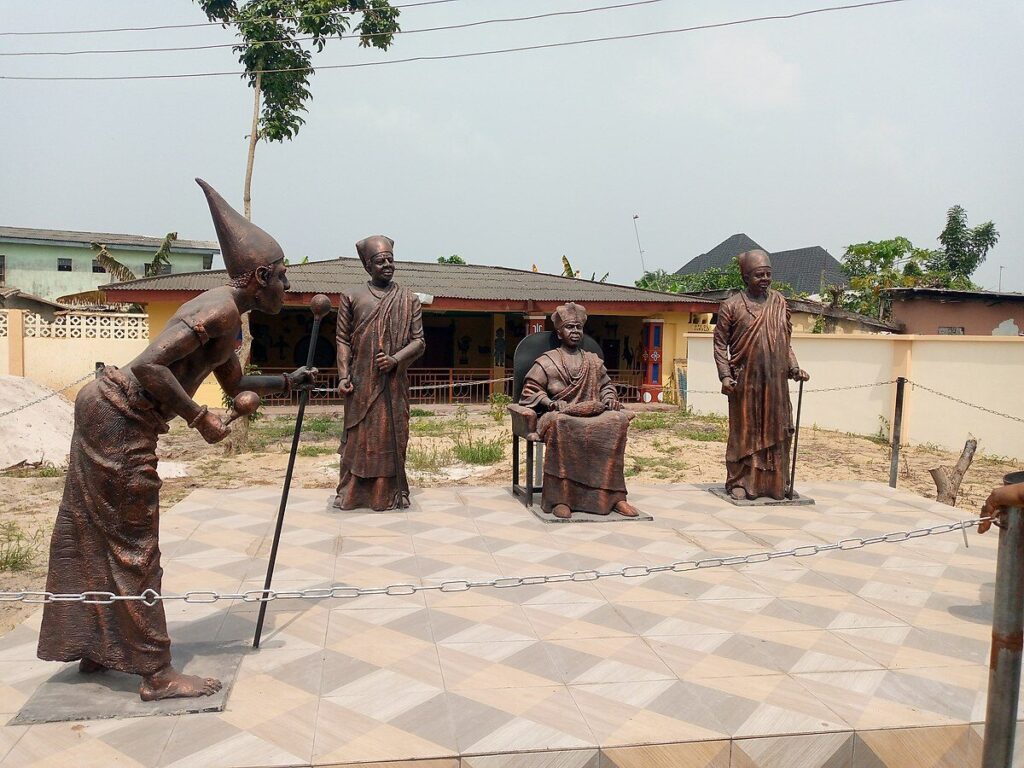
This is where it all began. The Vlekete Slave Market was the auction ground where captured Africans were sold. Here, enslaved men, women, and children were inspected and traded in exchange for guns, mirrors, alcohol, ceramic plates, brass, and textiles. Monuments have been created at the site.
2. The Brazilian Barracoon of Seriki Williams Abass
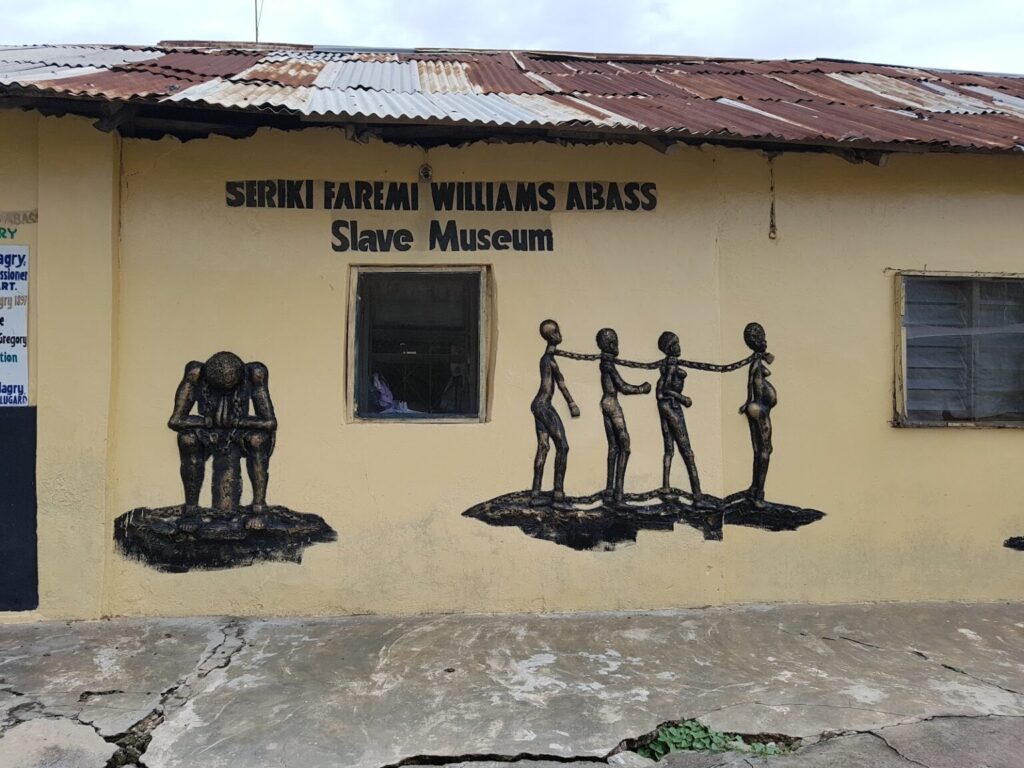
After the auction, enslaved people were moved to the barracoons—holding facilities where they waited, sometimes for months, until a ship arrived.
Built in the 1840s, this was essentially a warehouse for storing captives. It consists of 40 rooms built around an open interior space with a well, still in use. Each room, about three metres by three metres, originally had only one small window near the ceiling for ventilation, holding up to forty men, women, and children.
Seriki Williams Abass himself was a formerly enslaved man who returned to Badagry from Brazil and became a slave trader.
3. The Mobee Family Slave Relics Museum
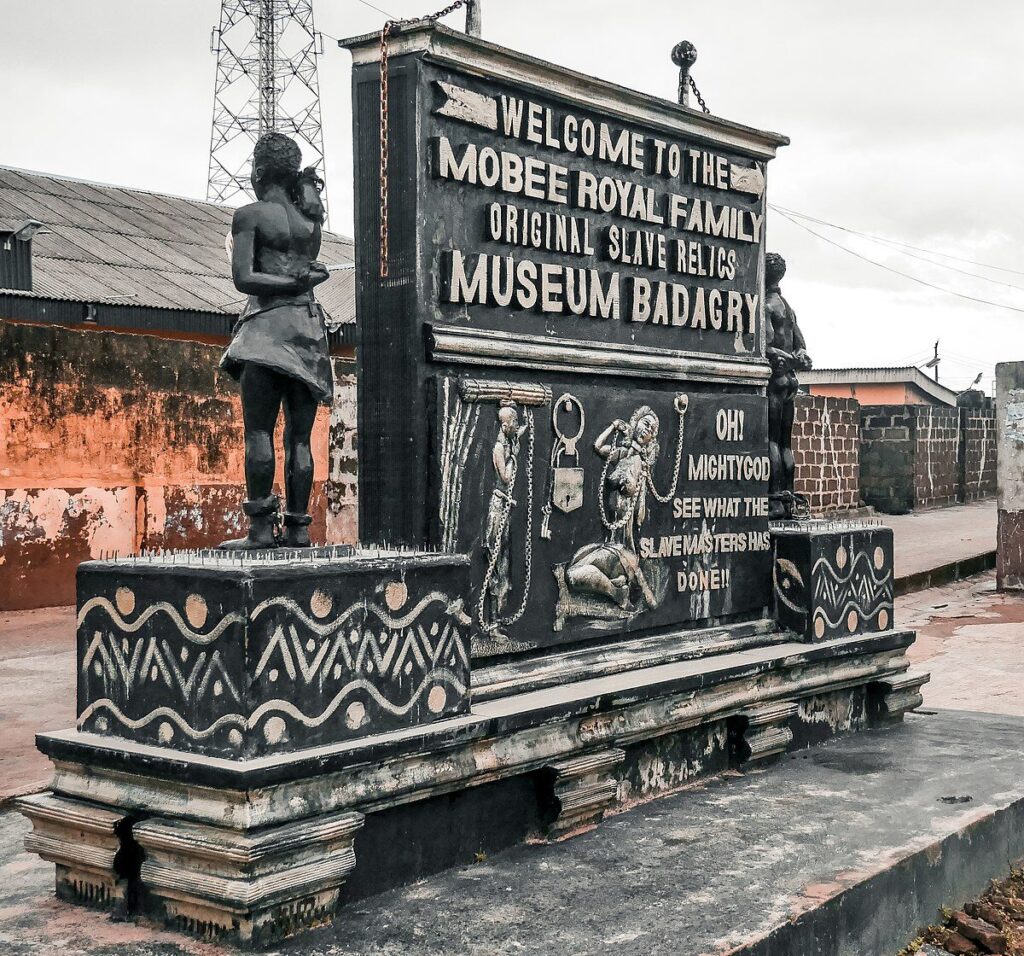
Sunbu Mobee was a prominent 18th-century slave merchant and head of the Mobee royal family in Badagry, Nigeria. Today, the relics of the family’s participation in slavery and many of the tools used to capture and hold captives can be found in the Mobee Family Slave Relics Museum, which sits at the top of Mobee Street in Badagry.
This museum will haunt you. It displays the neck chains, ankle irons, and shackles used on enslaved people. It shows the goods exchanged for human lives. And it does not soften the story of the local chief who sold his own people.
4. The Badagry Heritage Museum
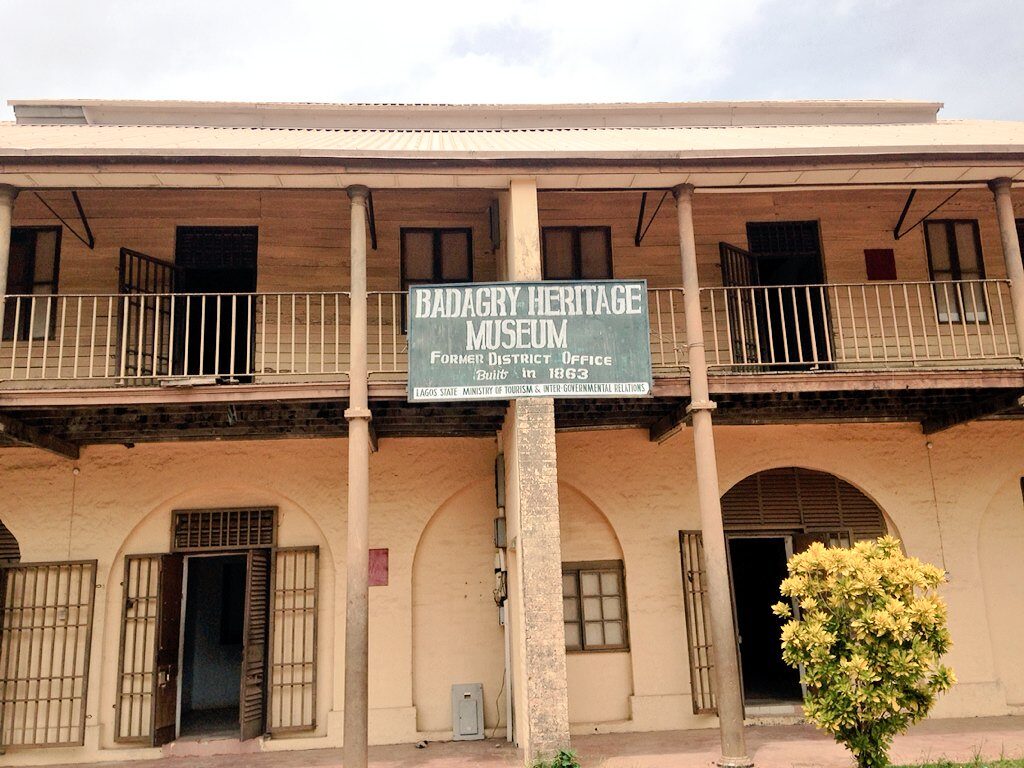
This is where the broader historical narrative comes together. The museum walks visitors through the entire arc of the transatlantic slave trade—from its origins to abolition. Artifacts, photographs, and documents fill the space.
The museum also documents the liberation story. It does not end at the ships. It follows through to resistance, abolition, and the emergence of African and African-American identity in the diaspora.
5. Gberefu Island and the Point of No Return
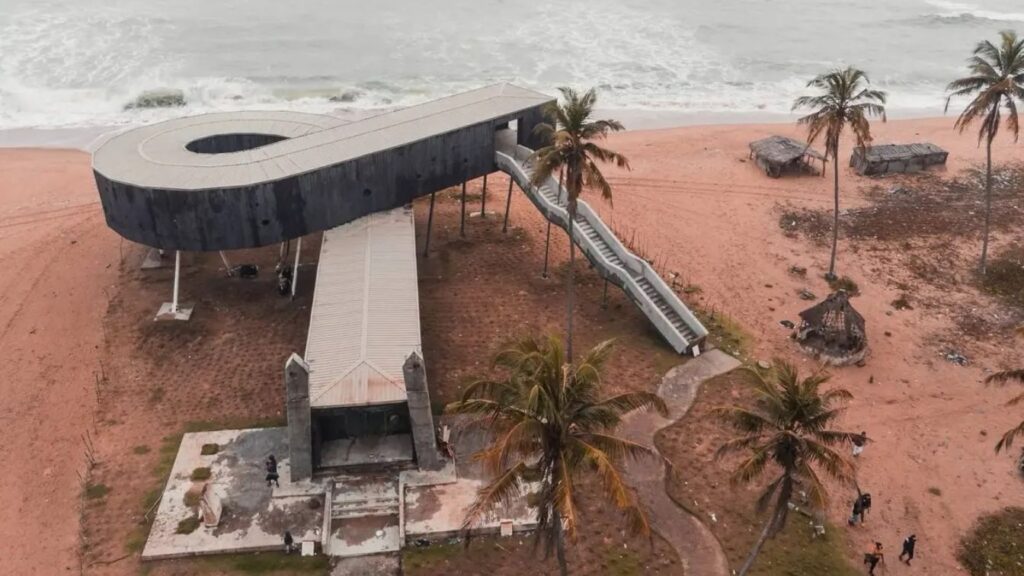
Gberefu Island (the Point of No Return) takes you on the route the slaves took to get to the Atlantic Ocean, where the slave ships were docked.
You reach Gberefu by boat, a two-to-five-minute ride across the water. Then you walk.
From the Gberefu jetty, the hiking begins: a fifteen to thirty-minute walk along the original slave route down to the Point of No Return.
The path is sandy, and palm trees line both sides.
The Spirit Attenuation Well
During the slave trade, the spirit attenuation well is said to have been charmed by shamans and chiefs. Slaves on their way to the Americas were given water from the well to forget their homes and cut their psychological ties to Badagry. It is said that the water would take effect three months into the journey, supposedly leaving the slave with no connection to anything but the lives they had been sold into. The locals claim that no one has drunk from the well in over a century.
It is unclear when the well was dug, but it still holds a lasting impact as “The Point of No Return” in Badagry.
The well is still there. Still full. Tour guides say locals are still afraid to drink from it.
The Point of No Return Monument: Where the Land Meets the Sea
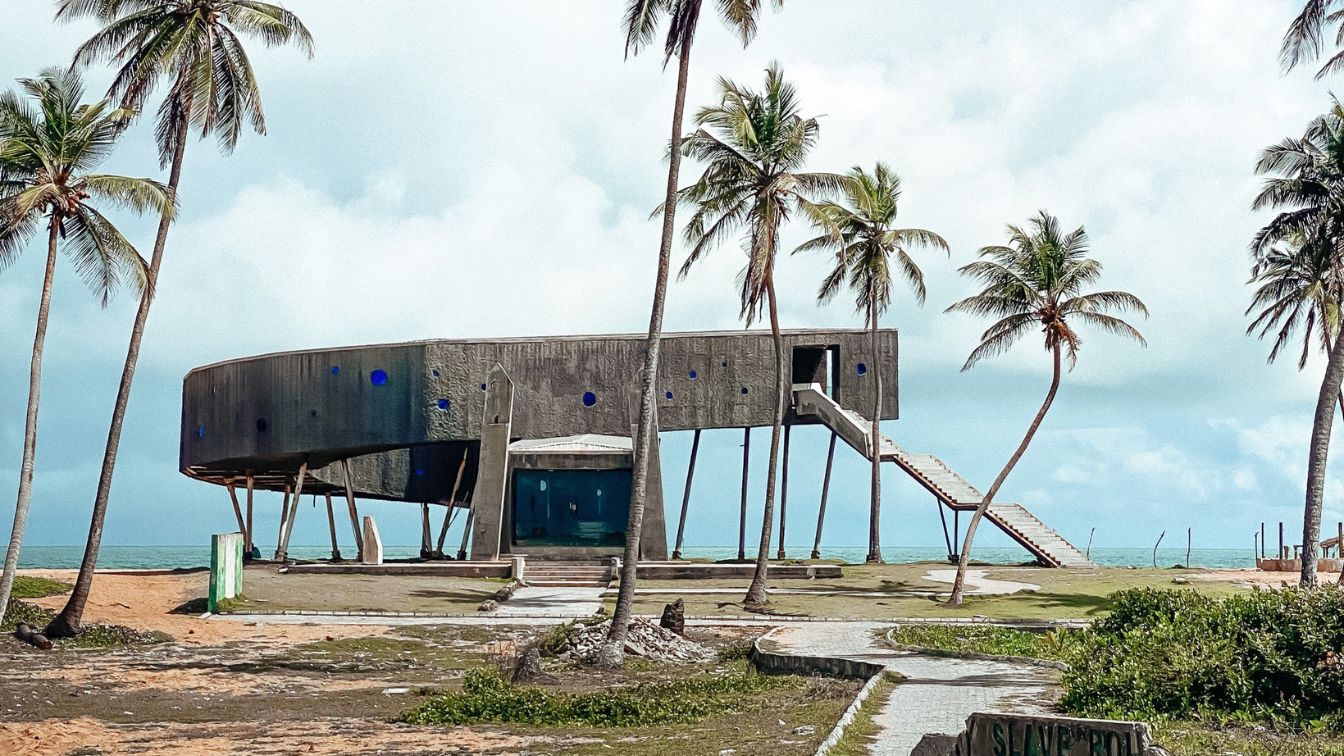
At the end of the slave route, where the path opens onto the beach and the Atlantic, stands the cenotaph. It’s the last place these people stood as free human beings on African soil. Beyond that waterline was a world they never asked for. For many, it was death at sea. For others, it was a lifetime of bondage.
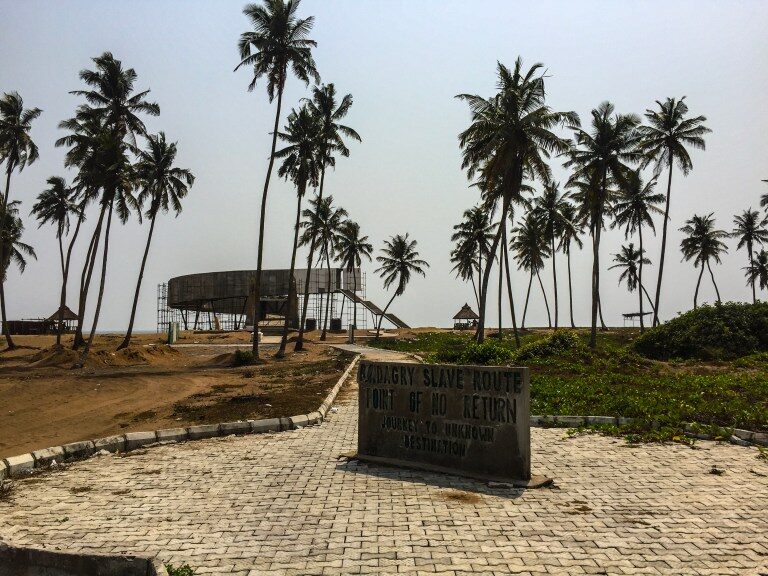
The Door of Return: When the Diaspora Comes Home
On 24 August 2017, Nigeria erected the first symbolic Door of Return monument as part of the Diaspora Festival in Badagry. The Door of Return is an emblem of the African Renaissance and is a pan-African initiative that seeks to launch a new era of cooperation between Africa and its diaspora in the 21st century.
The Badagry Door of Return Experience is a cultural event commemorating the homecoming of diasporic Africans who are descendants of African ancestors who were taken away as slaves to the Americas over the course of some 400 years during the trans-Atlantic enslavement of African peoples.
Every year, African Americans, Afro-Caribbeans, and Black Europeans travel to Badagry for this festival. They walk the same path and stand at the same shore their ancestors stood on.
Final Note
Today, Badagry is an important historical city because of its trans-Atlantic connections and historical sites.
Here’s something you must know: The enslaved came from all over West Africa. They were not only Yoruba or Badagry people. Captives from as far as the Oyo Empire, the Niger Delta, and beyond passed through these gates. Badagry was a terminus for a vast inland network of raiders and traders.
Gberefu Island was itself a victim. Slave traders and warriors under the charge of Chief Sunbu Mobee also captured inhabitants of the island, young and old, and put them on the path that led to western lands.
The first Union Jack in Nigeria was hoisted in Badagry. And the first Christian sermon in Nigeria was preached here too, under what is now called the Agiya Tree Monument. The British used Christianity and commerce as twin tools of penetration into the continent. Both arrived in Badagry first.
Planning Your Visit to Badagry’s Slave Attractions
Getting there from Lagos: By road, Badagry is about 2.5 hours from central Lagos without traffic, along Badagry Expressway. By boat is faster, about an hour each way.
What to visit:
- Badagry Heritage Museum (open Monday–Saturday, 9am–5pm)
- Seriki Williams Abass Brazilian Barracoon
- Mobee Family Slave Relics Museum
- Vlekete Slave Market site
- Gberefu Island and the Point of No Return
- The Spirit Attenuation Well
Practical tips:
- Start early. A full tour takes at least 4–6 hours.
- Hire a knowledgeable guide. The oral history they carry is irreplaceable.
- Wear comfortable shoes. The sand on Gberefu is deep and hot.
- Bring water, sunscreen, and a hat.
- Go with an open heart. This is not a typical sightseeing tour.
Accommodation: Whispering Palms Resort is a popular base for Badagry tours and can arrange guided itineraries.
Ready to plan your Badagry visit? Contact us to explore our travel guides and curated tours to Badagry.
Join our WhatsApp channel – It’s fun in there! Come see for yourself.
Have you been to Badagry, or are you planning to visit? Drop a comment and let us know! Share your experience.
You May Also Like:
Badagry Tourism: Why This Historic Town Is a Diaspora Pilgrimage Destination in Nigeria
Best Places to Visit in Badagry (A Tourist 2-Day Staycation Guide)